

Year of the Rat
Rat Chinese Zodiac Sign: Meaning, Personality & Complete Guide
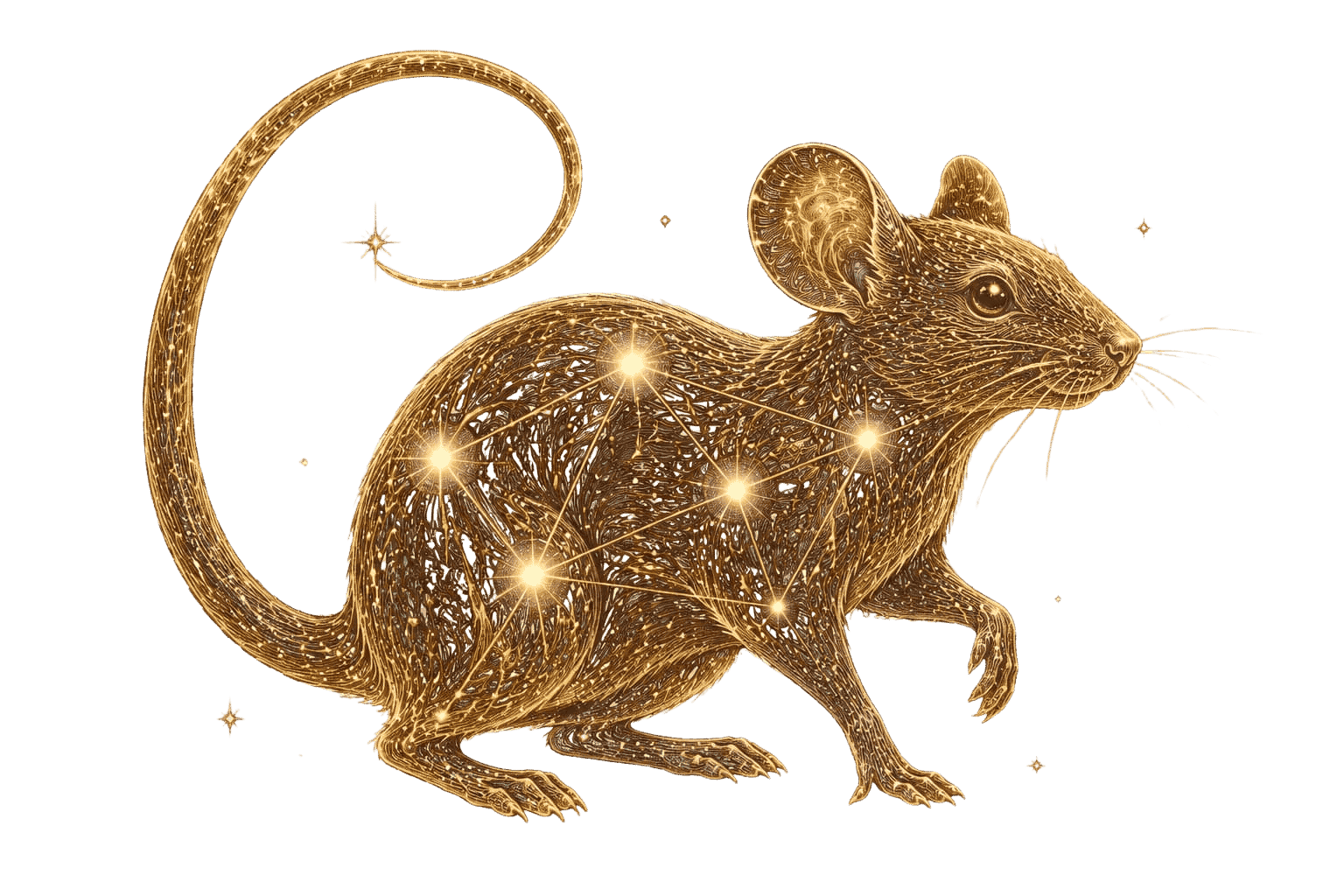
The Rat (鼠, Shǔ) is the first sign of the Chinese zodiac, traditionally associated with intelligence, adaptability, resourcefulness, curiosity, and the ability to recognize opportunity. People born in a Rat year are traditionally described as quick thinkers and practical problem-solvers with a talent for noticing possibilities that others overlook.
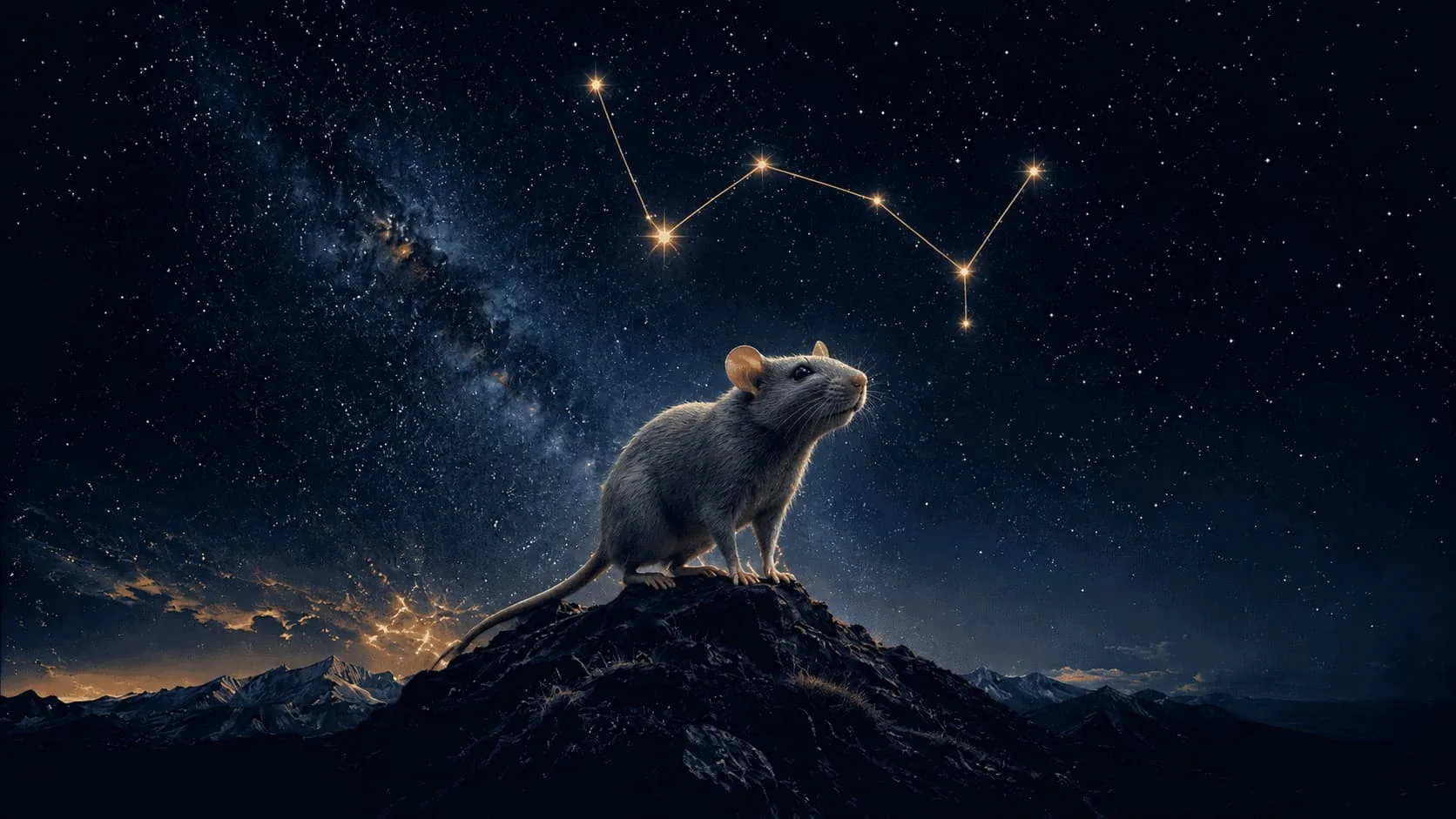
The Rat holds a special place in Chinese culture: it won first place in the legendary Great Race, becoming the opening sign of the twelve-year cycle. As a result, the Rat is often regarded as a symbol of initiative, cleverness, and new beginnings — celebrated for wisdom and strategy rather than physical strength.
Chinese astrology is a traditional cultural and philosophical system rather than a scientifically established method for predicting personality. The following guide reflects traditional symbolism and cultural belief, explored for reflection and entertainment.
The Legend of the Great Race
The Rat's first position in the zodiac comes from one of Chinese mythology's most famous stories. The Jade Emperor invited the animals to race across a river, and the order in which they finished determined their place in the zodiac.
A clever plan
The Rat noticed that the Ox, one of the strongest swimmers, planned to cross the river directly, and politely asked to ride on its back for the crossing.
A well-timed leap
As the Ox neared the far bank, the Rat jumped ahead at the last moment, crossing the finish line first.
First of twelve
The Rat became the very first animal of the Chinese zodiac — a permanent symbol of intelligence, timing, and the courage to seize an opportunity.
Rather than celebrating deception, most traditional interpretations emphasize the Rat's creativity: it watched its environment carefully, recognized an opportunity others missed, and used available resources cleverly rather than relying on raw strength alone.
The Rat's victory symbolizes that wisdom and planning can sometimes accomplish what strength alone cannot.
鼠 Because the Chinese zodiac follows the lunar calendar, people born in late January or early February should check the exact Lunar New Year date for their birth year before assuming their sign.
What Does the Rat Symbolize?
According to traditional Chinese astrology, the Rat symbolizes intelligence, opportunity, and the ability to survive and thrive through observation rather than force.
Symbolically associated with activity, initiative, confidence, and outward energy — Yang and Yin are complementary forces, not opposites of good and bad.
Traditionally linked to wisdom, flexibility, communication, and reflection — the combination of Yang energy and Water symbolism shapes the Rat's reputation for adaptability.
Although rats are viewed negatively in some cultures, Chinese tradition emphasizes the animal's ability to survive difficult circumstances through intelligence and careful observation — making it, alongside the Dragon, one of the zodiac's clearest symbols of prosperity and new beginnings.
Rat Personality Explained
The Rat is traditionally viewed as one of the zodiac's most intelligent and adaptable signs, known for practical thinking and a genuine love of learning.
Intelligence
Quick learning, strong memory, and creative problem-solving — admired less for knowledge alone than for knowing how to apply it in real situations.
Adaptability
Adjusts to new environments, stays calm during uncertainty, and finds alternative solutions rather than resisting change.
Resourcefulness
Makes efficient use of available resources — practical, prepared, and confident when navigating unexpected challenges.
Curiosity & observation
A strong desire to understand the world, paired with a quiet gift for noticing small details, patterns, and opportunities others miss.
Strategic thinking
Prefers planning before acting — setting goals, weighing options, and thinking several steps ahead rather than moving impulsively.
Communication
Friendly, diplomatic, and an active listener — the Rat often builds relationships through engaging, thoughtful conversation.
Creativity
Practicality and imagination work together — finding original solutions and improving on existing ideas.
Quiet leadership
Leads through calm decision-making and fairness rather than seeking attention — leading by example.
Lifelong learning
Enjoys improving skills, setting new goals, and treating mistakes as opportunities to grow.
Traditional Chinese astrology does not generally define the Rat by dishonesty. Its central symbolism is intelligence, creativity, and strategic thinking — the same qualities that won it the Great Race.
Rat Strengths
According to tradition, the Rat's greatest symbolic strengths are intelligence, adaptability, and the ability to turn everyday opportunities into lasting success.
Sharp & practical
Applies knowledge to real-world problems rather than relying on theory alone — a natural, efficient problem-solver.
Loyal
Keeps promises, supports loved ones, and values long-term friendships — a dependable presence once trust is built.
Optimistic
Maintains hope during difficult situations and keeps moving forward after setbacks — resilience paired with confidence.
Responsible
Dependable, organized, and consistent — takes commitments seriously in both personal and professional life.
Financially savvy
Symbolically linked to careful budgeting, saving, and long-term planning — making thoughtful use of what's available.
Rat Weaknesses
Like every zodiac sign, the Rat's growth areas are traditionally linked to patience, trust, and emotional openness — the flip side of its quick, independent mind.
Overthinking
Naturally analytical, the Rat may spend too much time weighing every possibility — leading to mental fatigue or delayed decisions.
Difficulty trusting others
Values independence and preparation, which can make delegating or accepting help feel uncomfortable.
Emotional reserve
Loyal and caring, but doesn't always express feelings easily — growth involves sharing emotions more openly with trusted people.
Restlessness
Constant activity and preparation can lead to stress or difficulty relaxing — rest is as valuable as productivity.
Excessive worry
Preparation is a strength, but it can tip into overthinking the future — not every situation can be planned for or controlled.
The Rat's journey is about transforming intelligence into wisdom — balancing quick thinking with patience, and independence with trust in others.
Rat in Love & Relationships
Traditional Chinese astrology associates the Rat with loyalty, affection, and commitment in romantic relationships — approaching love thoughtfully rather than rushing in.
Trust, honesty, stability, and a partner willing to build a future together gradually and thoughtfully.
Remembering important dates, offering practical help, and paying close attention to a partner's needs.
Dating a Rat
Thoughtful and observant — the Rat gets to know a partner gradually, building trust over time rather than through grand romantic gestures.
Commitment & conflict
Once committed, the Rat is traditionally viewed as someone a partner can rely on during both joyful and difficult times. During disagreements, the Rat may withdraw to think things through — healthy conflict resolution comes from returning to the conversation rather than avoiding it.
Love at a Glance
Rat Compatibility with the 12 Chinese Zodiac Signs
Traditional Chinese astrology views compatibility as a symbolic reflection of complementary energies rather than a scientific prediction. Healthy relationships depend on communication, trust, and shared effort — not birth year alone.
Rat + Rat
Two Rats often understand each other's ambitions and practical outlook, with excellent communication and shared long-term goals.
Rat + Ox
One of the most highly regarded pairings in Chinese astrology — the Rat brings creativity and new ideas, the Ox offers stability and reliability.
Rat + Tiger
The Rat's careful planning complements the Tiger's courage and confidence — adventure balanced with preparation.
Rat + Rabbit
Both signs traditionally value peace and meaningful relationships, with gentle communication and mutual respect.
Rat + Dragon
One of the strongest traditional pairings — the Dragon provides inspiration, the Rat contributes strategy and planning.
Rat + Snake
Both signs appreciate wisdom and thoughtful decision-making, sharing financial awareness and a long-term vision.
Rat + Horse
A pairing that traditionally requires extra understanding — the Rat values planning and stability while the Horse symbolizes freedom and spontaneity.
Rat + Goat
Different priorities, but a relationship that can still grow meaningfully through creativity, kindness, and compassion.
Rat + Monkey
Another highly regarded pairing — both signs share intelligence, adaptability, curiosity, and a love of lifelong learning.
Rat + Rooster
Both traditionally appreciate organization and responsibility, sharing practical thinking and reliability.
Rat + Dog
Both value loyalty and honesty, building trust through dependability and shared family values.
Rat + Pig
The Pig's generosity complements the Rat's thoughtful planning, creating a warm and supportive partnership.
Traditional Chinese astrology often names the Ox, Dragon, and Monkey as the Rat's strongest matches — pairings built on complementary strengths, shared ambition, and mutual respect.
Rat Career & Money
The Rat is traditionally portrayed as a strategic professional who prefers to think before acting — valuing careful planning, long-term thinking, and efficient organization.
Rat at work
Prepares thoroughly before important decisions — assessing risk and solving complex problems with practical, analytical thinking.
Organized & fair leadership
Leads through strategy and calm decision-making rather than authority alone — earning respect through competence.
Entrepreneurial spirit
Naturally resourceful when starting new ventures — spotting opportunities and adapting quickly to changing markets.
Careers suited to the Rat
Traditionally associated with careful financial management — saving, budgeting, and preparing for the future.
May prioritize saving so strongly that enjoying life's rewards gets delayed — balance matters as much as preparation.
Rat Family & Friendship
The Rat is symbolically associated with loyalty, dependability, and putting family first — often the one who preserves meaningful traditions and memories.
As a friend
A lifelong friend who supports others through useful advice and dependable actions rather than words alone.
In the family
Views family as one of its strongest sources of purpose — dependable, and willing to preserve family memories and continuity.
As a parent
Encourages curiosity, honesty, and responsibility — providing a stable, supportive home while helping children develop their abilities.
Social life
Enjoys learning from others and engaging in stimulating conversation — friendly, curious, and genuinely interested in people's lives.
Rat Health & Well-Being
Traditional Chinese astrology links the Rat's energetic nature to a wide range of physical activity, balanced by the need for genuine rest.
Nervous energy
The Rat's quick mind benefits from outlets like exercise and hobbies that channel mental energy productively.
Sleep & rest
Prone to overthinking at night — consistent wind-down routines support better sleep quality.
Emotional balance
Healthy emotional expression, rather than internalizing stress, supports resilience and life satisfaction.
Active lifestyle
Traditionally associated with enjoying variety — from walking to team sports to hands-on hobbies.
The Five Elements of the Rat
In Chinese astrology, each of the 12 animals cycles through five natural elements — Wood, Fire, Earth, Metal, and Water — creating a complete 60-year calendar cycle. The element adds a symbolic layer to the Rat's core personality.
Wood Rat
Cooperative, idealistic, and growth-oriented — sociable and open to new ideas and collaboration.
Fire Rat
Energetic, confident, and adventurous — passionate, though sometimes quick to react under pressure.
Earth Rat
Practical, stable, and hardworking — cautious with money and grounded in realistic planning.
Metal Rat
Ambitious, decisive, and strong-willed — direct in communication and determined to achieve its goals.
Water Rat
Intuitive, diplomatic, and emotionally perceptive — adaptable and skilled at reading people and situations.
Rat Birth Years
Because the Chinese zodiac follows the lunar calendar, anyone born in January or early February should check the exact Lunar New Year date before confirming their sign.
Myth or Fact?
The Rat symbolizes dishonesty.
Traditional Chinese astrology more commonly associates the Rat with intelligence, creativity, and strategic thinking rather than deceit.
Everyone born in a Rat year has the same personality.
Chinese astrology offers symbolic archetypes; individual personality is shaped by family, culture, education, and personal experience.
Being adaptable means lacking principles.
Traditional philosophy distinguishes adaptability from inconsistency — the Rat adjusts its methods while staying true to its core values.
Frequently Asked Questions About the Year of the Rat
What does the Rat symbolize in Chinese astrology?
Intelligence, adaptability, resourcefulness, curiosity, and the ability to recognize opportunity.
Why is the Rat first in the Chinese zodiac?
According to the legend of the Great Race, the Rat rode on the Ox's back across a river and leapt ahead just before the finish line, becoming the first animal of the cycle.
Which years are Years of the Rat?
Recent Rat years include 1924, 1936, 1948, 1960, 1972, 1984, 1996, 2008, 2020, and 2032.
Is the Rat lucky in Chinese culture?
Yes — the Rat is traditionally viewed as a symbol of prosperity, wit, and new beginnings.
What element is the Rat associated with?
Water is the Rat's permanent element, while each birth year also cycles through Wood, Fire, Earth, Metal, and Water.
What is the Rat's Yin-Yang classification?
The Rat is classified as Yang, symbolizing activity, initiative, and outward energy.
Which signs are most compatible with the Rat?
The Ox, Dragon, and Monkey are traditionally considered the Rat's strongest matches.
Which sign is most challenging for the Rat?
The Horse is traditionally seen as the most challenging pairing, since the two signs symbolize contrasting approaches to stability and freedom.
What are the Rat's greatest strengths?
Intelligence, adaptability, resourcefulness, loyalty, and strategic thinking.
What are the Rat's biggest challenges?
Overthinking, difficulty trusting others, and emotional reserve — growth opportunities rather than fixed flaws.
What careers suit the Rat?
Entrepreneur, writer, financial analyst, researcher, strategist, and journalist, among others.
Is the Rat a good leader?
Yes — the Rat tends to lead through strategy, fairness, and calm decision-making rather than seeking attention.
Is the Rat good with money?
Traditionally yes — the Rat is associated with careful budgeting, saving, and long-term financial planning.
Is the Rat loyal in relationships?
Yes, deeply loyal and devoted once trust is established, though emotional expression may develop gradually.
Does the Rat fall in love easily?
Not typically — the Rat tends to get to know a partner gradually rather than rushing into romance.
Can two Rats have a successful relationship?
Yes — Rat-Rat pairings often share loyalty, planning, and communication, though both may need to balance overthinking with spontaneity.
What animal represents the Rat?
鼠 (Shǔ), the mouse or rat, symbolizing intelligence, resourcefulness, and the ability to seize opportunity.
What is the Rat's greatest weakness?
A tendency toward overthinking and excessive worry, which can delay action or increase stress.
Is Chinese astrology the same as Western astrology?
No — Chinese astrology is based mainly on birth year and the lunar calendar with 12 animal signs and Five Elements, while Western astrology is based on birth date and the tropical zodiac.
Does the Year of the Rat guarantee good luck?
No — traditional astrology offers symbolic themes rather than guarantees; real outcomes depend on effort, choices, and circumstances.
What is the Rat's greatest lesson?
Transforming intelligence into wisdom by balancing quick thinking with patience, and independence with trust.