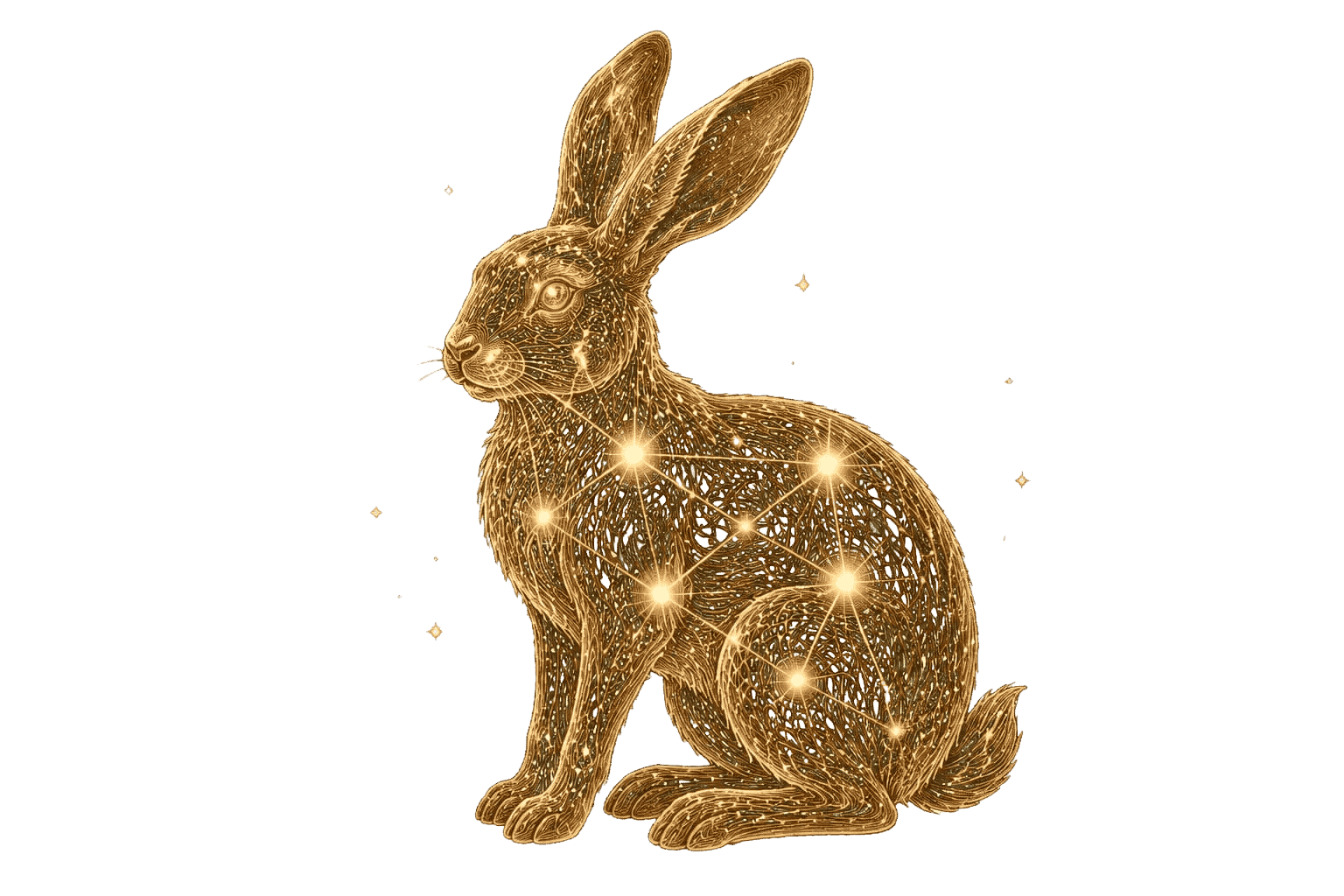




Year of the Rabbit
Rabbit Chinese Zodiac Sign: Meaning, Personality & Complete Guide
The Rabbit (兔, Tù) is the fourth animal in the twelve-year Chinese zodiac cycle. In traditional Chinese astrology, the Rabbit symbolizes gentleness, diplomacy, elegance, compassion, wisdom, and peace. Throughout Chinese history and folklore, the Rabbit has often represented refinement, kindness, and the ability to navigate life's challenges with patience and intelligence rather than force.
Unlike the Tiger, which traditionally symbolizes bold action and fearless leadership, the Rabbit is associated with calm decision-making, emotional sensitivity, harmony, and thoughtful communication — often portrayed as someone who prefers cooperation over conflict and values stability, beauty, and meaningful relationships.
Chinese astrology is a traditional cultural and philosophical system rather than a scientifically established method for predicting personality. The following guide reflects traditional symbolism and cultural belief, explored for reflection and entertainment.
The Legend of the Rabbit
According to one traditional version of the Great Zodiac Race, the Rabbit was known for its agility and quick thinking but faced a major challenge when it reached the wide river.
An unlikely swimmer
Unable to swim as powerfully as the Ox or Tiger, the Rabbit faced the river crossing at a clear disadvantage against the stronger animals.
Stepping stones and a floating log
The Rabbit cleverly hopped across stepping stones before making a daring leap onto a floating log, letting the current carry it forward.
Fourth, through cleverness
The Rabbit managed to reach the opposite shore safely, finishing fourth in the race — a position earned through intelligence rather than raw strength.
The story symbolizes intelligence, adaptability, perseverance, and the ability to overcome obstacles through clever solutions rather than physical strength — a reminder that resourcefulness often accomplishes what force alone cannot.
The Rabbit's crossing symbolizes overcoming obstacles through clever solutions rather than physical strength.
兔 For centuries, the Rabbit has symbolized peace and refinement throughout Chinese culture — traditionally viewed as a symbol of good fortune, peaceful living, and thoughtful decision-making.
What Does the Rabbit Symbolize?
Traditional symbolism commonly associates the Rabbit with kindness, compassion, diplomacy, elegance, patience, wisdom, sensitivity, grace, intelligence, and harmony.
Symbolically associated with calmness, reflection, patience, and emotional awareness — Yin and Yang are complementary forces, not opposites of good and bad.
Because of its gentle qualities, the Rabbit has traditionally been viewed as a symbol of good fortune, peaceful living, and thoughtful decision-making.
These symbolic qualities complement the Rabbit's traditional image as a thoughtful and peaceful personality — someone who navigates life's challenges through patience and intelligence rather than confrontation.
Rabbit Personality Explained
People born in the Year of the Rabbit are traditionally associated with gentleness, diplomacy, emotional intelligence, and grace — someone who prefers cooperation over conflict and approaches life with calm, thoughtful balance.
Compassion
One of the Rabbit's most recognized qualities — naturally attuned to the feelings and needs of others.
Diplomacy
Skilled at finding common ground and de-escalating tension — a natural peacemaker in most situations.
Elegance
Carries itself with grace and refinement, often drawn to beauty in its many forms.
Patience
Prefers thoughtful, well-considered decisions over rushed or impulsive action.
Wisdom
Approaches challenges with intelligence and adaptability rather than force — often finding the clever solution.
Emotional sensitivity
Deeply attuned to its own feelings and the emotional undercurrents of a room or relationship.
Harmony-seeking
Values peaceful surroundings and stable relationships, often working quietly to maintain balance.
Thoughtful communication
Chooses words carefully, favoring tact and kindness over blunt honesty.
Appreciation for beauty
Drawn to art, design, and refined experiences — finding meaning in aesthetics and craftsmanship.
Traditional Chinese astrology does not portray the Rabbit's gentleness as fragility. Its central symbolism is intelligence, adaptability, and the strength to overcome obstacles through cleverness rather than force.
Rabbit Strengths
According to tradition, the Rabbit's greatest symbolic strengths are compassion, diplomacy, and thoughtful, balanced decision-making.
Deep compassion
Naturally attentive to others' emotions, often the first to offer comfort or support in difficult moments.
Supportive, diplomatic leadership
Leads by building consensus and making everyone feel heard rather than through force or authority.
Calm under pressure
Approaches stressful situations with measured composure rather than reactive emotion.
Attention to detail
Careful and accurate in its work, valuing organization, planning, and quality.
Emotional intelligence
Reads social situations with ease, adjusting its approach to bring out the best in others.
Rabbit Weaknesses
Like every zodiac sign, the Rabbit's growth areas are traditionally linked to confidence and directness — the flip side of its gentle, harmony-seeking nature.
Avoiding conflict
A strong preference for harmony can sometimes mean necessary disagreements go unspoken.
Excessive caution
Careful decision-making is a strength, but it can occasionally slow down necessary action.
Overthinking
A thoughtful mind can sometimes dwell too long on decisions, weighing every possible outcome.
Sensitivity to criticism
Deep emotional awareness can make critical feedback feel more personal than intended.
Difficulty setting boundaries
A desire to keep the peace can sometimes make it hard to say no or advocate for its own needs.
The Rabbit's growth theme is balancing kindness with confidence and resilience — learning that harmony sometimes requires honest, direct conversation.
Rabbit in Love & Relationships
Traditional Chinese astrology often portrays the Rabbit as a devoted, romantic partner who values emotional security, trust, and genuine connection above all else.
Emotional security, kindness, trust, and a partner who values harmony and thoughtful communication.
Gentle attentiveness, thoughtful gestures, and creating a peaceful, comfortable home life.
Dating a Rabbit
Gentle and considerate — the Rabbit approaches romance carefully, taking time to build trust before opening up emotionally.
Commitment & conflict
Once committed, the Rabbit is traditionally viewed as a devoted, caring partner who prioritizes stability. During disagreements, the Rabbit tends to avoid confrontation — gentle encouragement to voice concerns directly often strengthens the relationship over time.
Love at a Glance
Rabbit Compatibility with the 12 Chinese Zodiac Signs
Traditional Chinese astrology views compatibility as a symbolic reflection of complementary energies rather than a scientific prediction. Healthy relationships depend on communication, trust, and shared effort — not birth year alone.
Rabbit + Rat
The Rat's practicality may complement the Rabbit's diplomacy, with success depending on honest communication and shared planning.
Rabbit + Ox
The Ox's reliability contrasts gently with the Rabbit's flexibility, together building a stable, loyal, and well-planned partnership.
Rabbit + Tiger
The Tiger's boldness balances the Rabbit's careful diplomacy — a pairing that grows stronger through mutual respect and patience.
Rabbit + Rabbit
Two Rabbits often understand each other's emotional needs deeply, sharing gentle communication and mutual respect.
Rabbit + Dragon
The Dragon's confidence contrasts with the Rabbit's quiet diplomacy, working best when differences are appreciated rather than criticized.
Rabbit + Snake
The Snake's reserved nature may sometimes differ from the Rabbit's need for emotional openness — understanding and empathy help reduce misunderstandings.
Rabbit + Horse
The Horse's enthusiasm may encourage the Rabbit to embrace new experiences, balancing caution with adventure.
Rabbit + Goat
One of the most harmonious pairings in Chinese astrology — the Goat's compassion and the Rabbit's kindness create deep emotional understanding.
Rabbit + Monkey
The Monkey's creativity often complements the Rabbit's thoughtful planning, enjoying learning and creative projects together.
Rabbit + Rooster
Traditionally one of the more challenging pairings — the Rabbit's harmony-seeking nature can clash with the Rooster's direct, high-standards approach.
Rabbit + Dog
The Dog's loyalty traditionally complements the Rabbit's caring nature — often regarded as one of the zodiac's strongest partnerships.
Rabbit + Pig
The Pig's generosity and optimism often balance the Rabbit's thoughtful personality, both valuing peaceful, supportive relationships.
Traditional Chinese astrology often names the Goat, Dog, and Pig as the Rabbit's strongest matches — pairings built on trust, kindness, emotional security, and mutual respect.
Rabbit Career & Money
The Rabbit is traditionally associated with careers requiring diplomacy, precision, creativity, and empathy — a respectful communicator who values organization and quality.
Rabbit at work
Approaches tasks with careful, accurate attention — valuing organization, planning, and consistent quality.
Diplomatic leadership
Leads through respectful communication — clear explanations, active listening, and constructive discussion.
Detail-oriented
Frequently associated with careful, precise work — strong in research, documentation, and quality control.
Careers suited to the Rabbit
Traditionally cautious and thoughtful with finances — preferring steady, well-planned decisions over speculative risk.
Overthinking financial decisions can occasionally lead to missed opportunities — building confidence helps balance caution.
Rabbit Family & Friendship
The Rabbit is symbolically associated with warmth and gentleness in personal relationships — a caring presence who prioritizes peace and emotional closeness.
As a friend
A gentle, supportive friend who listens carefully and offers thoughtful comfort during difficult times.
In the family
Often the peacemaker of the household — working quietly to maintain harmony and emotional closeness.
As a parent
Nurturing and patient — creating a warm, emotionally secure home for children to grow in.
Social life
Prefers meaningful, close friendships over large social circles — quality of connection matters most.
Rabbit Health & Well-Being
Traditional Chinese astrology links the Rabbit's sensitive nature to emotional well-being as much as physical health, benefiting from calm, restorative routines.
Emotional well-being
Mental and emotional health are closely tied to physical health for the Rabbit — stress relief matters as much as exercise.
Calming routines
Thrives with predictable, gentle routines that create a sense of stability and reduce overthinking.
Peaceful environments
Sensitive to surroundings — a calm, uncluttered space supports better mental clarity.
Gentle movement
Prefers low-impact, mindful physical activity over high-intensity, competitive exercise.
The Five Elements of the Rabbit
In Chinese astrology, each of the 12 animals cycles through five natural elements — Wood, Fire, Earth, Metal, and Water — creating a complete 60-year calendar cycle. The element adds a symbolic layer to the Rabbit's core personality.
Wood Rabbit
Cooperative, generous, and optimistic — more outgoing and team-oriented than other Rabbit variations.
Fire Rabbit
Passionate, expressive, and energetic — brings extra warmth and vibrancy to the Rabbit's gentle nature.
Earth Rabbit
Practical, dependable, and patient — the most grounded and steady expression of the sign.
Metal Rabbit
Disciplined, determined, and resilient — firmer and more decisive than other Rabbit variations.
Water Rabbit
Adaptable, intuitive, and diplomatic — the most emotionally perceptive expression of the Rabbit archetype.
Rabbit Birth Years
Because the Chinese zodiac follows the lunar calendar, anyone born in January or early February should check the exact Lunar New Year date before confirming their sign.
Lucky Symbols of the Rabbit
Myth or Fact?
The Rabbit's gentleness means weakness.
Traditional Chinese astrology portrays the Rabbit's central strength as intelligence and adaptability — the ability to overcome obstacles through cleverness rather than force.
Everyone born in a Rabbit year has the same personality.
Chinese astrology offers symbolic archetypes; individual personality is shaped by family, culture, education, and personal experience.
Avoiding conflict means the Rabbit has no opinions.
The Rabbit values harmony, but traditional symbolism also emphasizes wisdom and thoughtful judgment — strong opinions, gently expressed.
Frequently Asked Questions About the Year of the Rabbit
What does the Rabbit symbolize in Chinese astrology?
Gentleness, diplomacy, elegance, compassion, wisdom, and peace.
Why is the Rabbit fourth in the Chinese zodiac?
According to legend, the Rabbit cleverly hopped across stepping stones and leapt onto a floating log to cross the river, finishing fourth behind the Rat, Ox, and Tiger.
Which years are Years of the Rabbit?
Recent Rabbit years include 1903, 1915, 1927, 1939, 1951, 1963, 1975, 1987, 1999, 2011, 2023, and 2035.
What element is the Rabbit associated with?
Each Rabbit year cycles through Wood, Fire, Earth, Metal, and Water, adding different symbolic characteristics to the Rabbit archetype.
What is the Rabbit's Yin-Yang classification?
The Rabbit is classified as Yin, symbolizing calmness, reflection, and emotional awareness.
Which signs are most compatible with the Rabbit?
The Goat, Dog, and Pig are traditionally considered the Rabbit's strongest matches.
Which sign is most challenging for the Rabbit?
The Rooster is traditionally seen as the most challenging pairing, since the two signs symbolize contrasting communication styles around directness and harmony.
What are the Rabbit's greatest strengths?
Compassion, diplomacy, calm decision-making, and emotional intelligence.
What are the Rabbit's biggest challenges?
Avoiding conflict, overthinking, and difficulty setting boundaries — growth opportunities rather than fixed flaws.
What careers suit the Rabbit?
Teaching, counseling, psychology, human resources, interior design, and writing, among others.
Is the Rabbit a good leader?
Yes — the Rabbit tends to lead through diplomacy and consensus-building rather than force, making others feel genuinely heard.
Is the Rabbit good with money?
The Rabbit tends to be cautious and thoughtful with finances, preferring steady decisions over speculative risk.
Is the Rabbit loyal in relationships?
Yes, deeply devoted once trust is established, valuing emotional security and genuine connection above all else.
Does the Rabbit fall in love easily?
Not typically — the Rabbit approaches romance carefully, taking time to build trust before opening up emotionally.
Can two Rabbits have a successful relationship?
Yes — Rabbit-Rabbit pairings often share deep emotional understanding, though both may need to build confidence for difficult decisions.
What animal represents the Rabbit?
兔 (Tù), the rabbit, symbolizing peace, kindness, and diplomacy.
What is the Rabbit's greatest weakness?
A tendency to avoid necessary conflict, which can leave important disagreements unspoken.
Is Chinese astrology the same as Western astrology?
No — Chinese astrology is based mainly on birth year and the lunar calendar with 12 animal signs and Five Elements, while Western astrology is based on birth date and the tropical zodiac.
Does the Year of the Rabbit guarantee good luck?
No — traditional astrology offers symbolic themes rather than guarantees; real outcomes depend on effort, choices, and circumstances.
What is the Rabbit's greatest lesson?
Balancing kindness with confidence and resilience — learning that harmony sometimes requires honest, direct conversation.